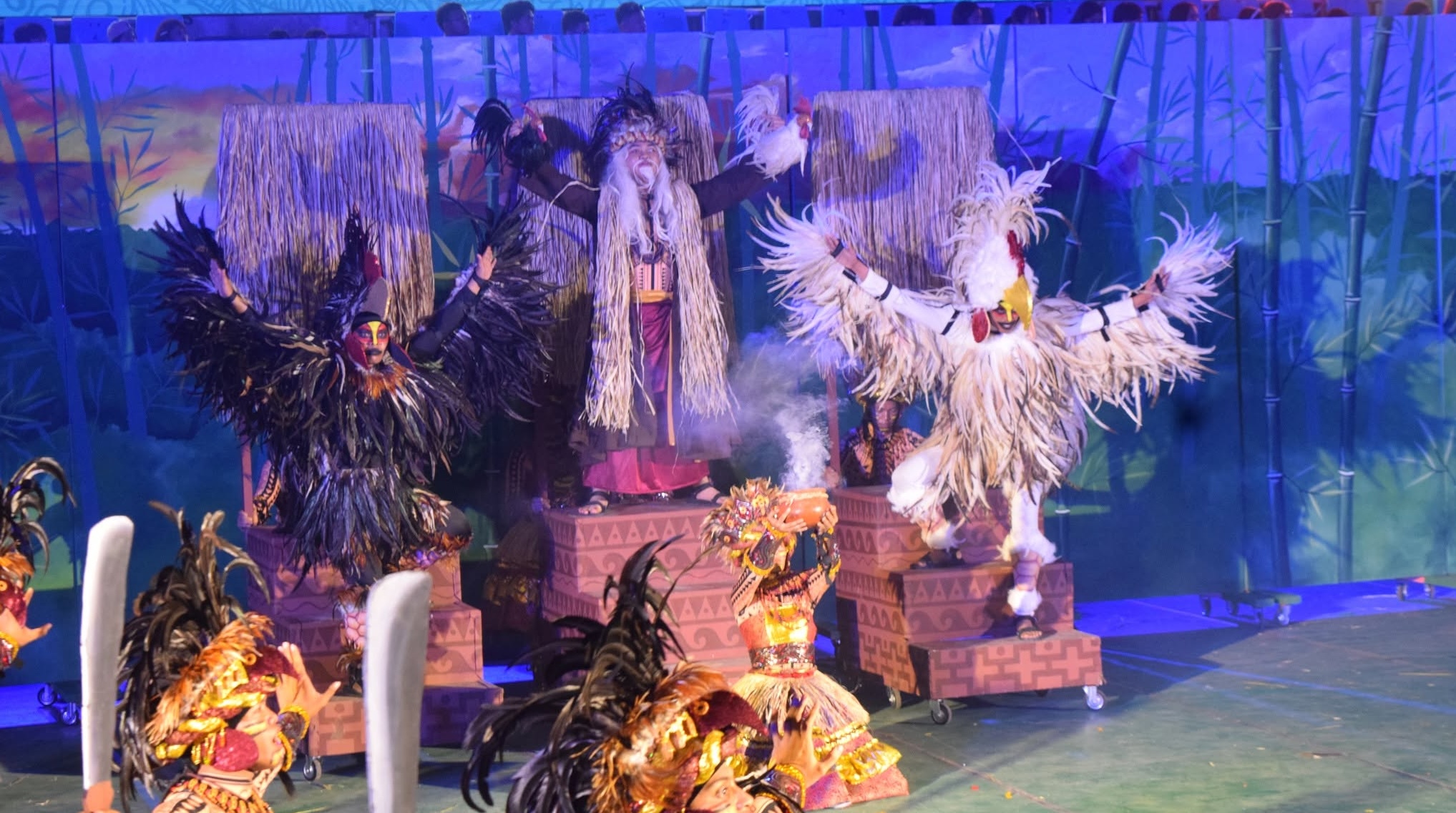
Hadang is an ancient Visayan ritual of making offerings to spirits, traditionally performed to seek protection, healing, good fortune or a bountiful harvest.
Many festivals revive a tradition that has already passed. Hadang did not need reviving. The ritual is still performed in Calbayog by tambalans, the local shamans, with offerings that at times include pigs or roosters. The word itself sits within a wider Visayan family of terms for offering:
halad, carrying the same meaning across several Visayan languages;
lahad in Tagalog, the act of presenting or offering, a cognate of both;
paganitu, the offering practice recorded in the Visayas in Francisco Ignacio Alcina's Historia de las Islas e Indios de Bisayas of 1668.
This living practice is the cultural and choreographic foundation of Calbayog City's annual festival.
Official naming and ordinance history
For years the event carried the dual title Sarakiki-Hadang Festival. Sarakiki refers to the frenzied movements of a rooster during courtship or conflict, which originally inspired the festival's dance movements.
The City Council passed Ordinance No. 2025-27-658 on 27 August 2025, and it was signed into law on 1 September 2025, establishing Hadang Festival as the official designation and discontinuing official use of the older name. The city government enacted the change to protect the authenticity of the festival's sacred ritual roots, ending years of debate over which name better represented Calbayog's cultural identity. Sarakiki imagery and the rooster motif remain integral to Calbayog's dance heritage; Hadang is the sole official identity.
Event scope and calendar
A week-long celebration leading up to 8 September, culminating on the Feast of the Nativity of the Blessed Virgin Mary, the Calbayog City Fiesta. The week carries street dancing, cultural showcases, live concerts, art exhibitions, parades, local competitions and fireworks. Each year's programme, results and photographs are kept on that year's own page.